.png?width=185&height=185&name=Chris%20Dunkerley%20logo%202026%20(1).png)
When you first begin intermittent fasting, the scale is a trusted tool that shows true results. But as fasting time frames normalise and extend, training is layered on top, and appetite and nutritional requirements change, the scale can become one of the most misleading tools you use.
One pattern I've discovered during this experiment, is that just because something previously worked, doesn't mean it always will.
The same can be said for the scales. For me, they have become a tool which fluctuates in accuracy and usefulness. But I'll get to that.
At the start of this plant performance, fasting experiment, the scales would often lie the morning after an evening refeed (the first meal after a fast).
You eat well, and refuel properly.
Then the next morning… your weight is up.
The extent to which will depend on;
-
how long your fast has been,
-
how heavily you have trained during it,
- what you ate in your refeed.
Without understanding these variables, it's easy to let doubt creep in.
But this isn’t a failure of the system.
It’s a misunderstanding of what the body is actually doing.
Key Insights
- A sudden weight increase after eating is usually water, not fat
- Glycogen replenishment quickly pulls water back into the muscle
- Sodium, carbohydrates, and timing all influence scale fluctuations
- Plant-based refeeds can amplify this effect due to carbohydrate density
- Short-term scale spikes often precede performance improvements
- Misreading these signals leads to unnecessary restriction, and worse outcomes
Remember: This and other articles here, reflect personal experimentation and (are) not medical advice.
What the Scale Is Actually Showing You
After a structured refeed, your body is not gaining fat overnight.
It’s restoring.
When you fast, glycogen stores are depleted.
When you refeed, especially with carbohydrates, those stores refill.
And glycogen doesn’t come back alone.
For every gram of glycogen stored, your body pulls in 3 grams of water alongside it.
That means the scale can jump quickly, even when body fat hasn’t changed at all.
If anything, this is a sign the system is working.
Take a look at this blog which explains how glycogen use affects water retention and urination timing.
Why This Effect Can be Stronger on a Plant-Based (Vegan) Diet
If you’re eating plant-based, this effect can be even more pronounced, because most whole plant foods are:
- Higher in carbohydrates
- Higher in fibre
- Lower in fat
This combination drives efficient glycogen replenishment, and with it, water retention.
Meals built around:
- Rice
- Oats
- Lentils
- Fruit
…will naturally refill glycogen faster than higher-fat alternatives.
Which means the scale response can look more dramatic.
But again, this is not fat gain.
It’s fuel being restored.
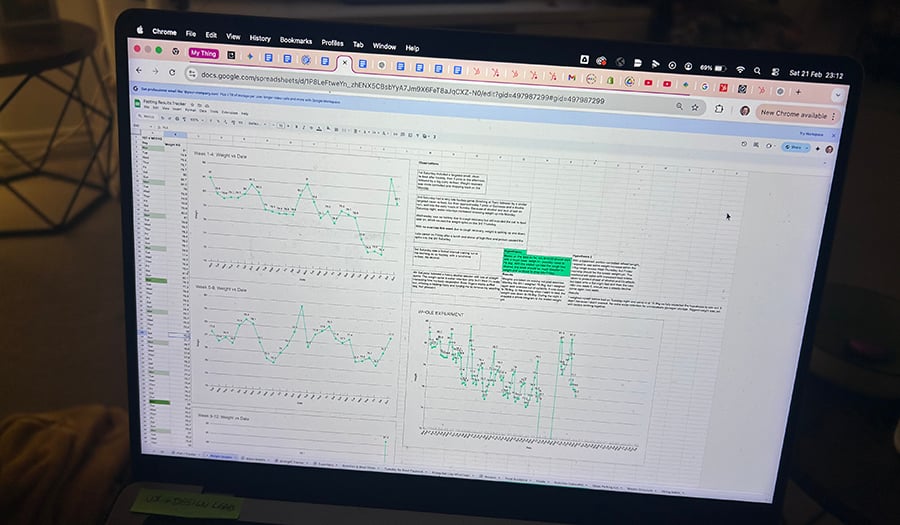
Sample Scale Data from my Experiment
Week 3
Date range: 1st-7th December 2025.
An interesting week for comparison because I wasn't well, and missed 3 days of training on Monday, Wednesday and Thursday.
I kept to the weekly fasting protocol including the 48 hr fast Sunday night to Tuesday night, but my refeed choices dramatically impact next-day scale numbers.
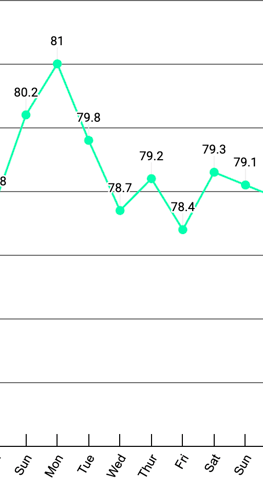
All weights are morning numbers
You can see the spikes in weight gain on the Thursday morning and the Saturday morning following food intake choices.
Weeks 5-6
Date range: 15th-28th December 2025.
The image below shows how my weight fluctuations between fasts and refeeds across weeks 5-6 of the experiment. Now recovered from illness, I was fasting and training on the days I missed in week 3. But you can see that the 2 weeks look very different.
Week 5 from Wednesday to Friday has fluctuations within half a kilogram. Fitness was strong and nutritional intake was sufficient for my needs.
But on Friday 19th December, I had 6 pints in the evening which bumped my weight by almost 1.5kg on the Saturday morning. With no hockey on the Saturday to utilise the glycogen and dispel the water, weight is up again by 0.5kg from glycogen intake on the Saturday.
A fast from Saturday to Sunday allowed water release and a 0.3kg drop, which then continued down into the 48hr fast Sunday night to Tuesday night - and actually on into the Wednesday too.
Where week 5 was relatively steady Wednesday-Friday, week 6 is very different. The Wednesday marked at 75.5kg is Christmas Eve. I ran in the morning ahead of Christmas Day on the Thursday - and the weight increases thereafter speak for themselves. But it's all water.
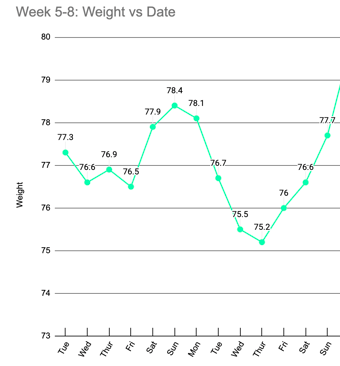
All weights are morning numbers
Contrasting Scale Data
Week 19-20
Date range: 28th March - 5th April 2026.
During my transition from the combined fasting, cardio and light strength sessions; to fasting, cardio, more strength sessions and advances in weight, to build muscle, my body has adapted and changed how it reacts to nutritional intake. And ultimately, the scale weight the morning after.
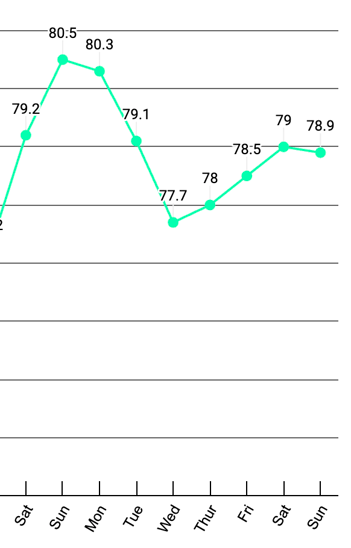
All weights are morning numbers
The spike at the first weekend is caused by refined sugar foods, specifically my new nemesis - birthday cake! (Look out for an upcoming blog on Why Sugar Crashes Changed After 12 Weeks of Fasting).
What this graph doesn't show is my upgraded fitness programme and intake needs in week 20. At this point I'm training 6 days a week as standard (although in this particular week, only 4 due to life circumastances).
My lift strength and frequency is up, and as such, so is my intake!
In contrast to the earlier weeks I've shared, my intake here is significantly up - but my weight gain is not. Weight increases shown are still water retention, but my body needs the increased nutritional intake to repair muscle and fully top up depleted glycogen from increased training.
For additional reading, check out this blog on why performance can improve without constant eating.
The morning scales aren't just affected by the food you eat, but by a common additive - salt.
Sodium, Timing, and the Illusion of “Gaining Weight”
Salt and pepper makes every meal taste better. For me, that was especially true on a vegan, whole plant-based food diet.
Something I have found, is that sodium intake, especially when timed around training, also influences short-term water retention.
A higher-sodium meal post-training can:
- Improve recovery
- Restore fluid balance
- Increase temporary water retention
On the scale, this looks like weight gain, but in reality, it’s part of the recovery process.
Timing plays a role too.
A late refeed means:
- Food still in the digestive system
- Fluids not yet processed
- Glycogen still being stored overnight
So the next morning’s weigh-in captures all of it. Take a look at Why Weeing at 2-3am Can be a Good Thing
The Pattern Most People Miss
Here’s where it gets interesting.
The weight spike is not random.
It follows a pattern:
- Fast → weight drops
- Refeed → weight jumps
- 24–48 hours later → weight stabilises or drops again
And often:
Performance improves in the window after the refeed. I've seen this first hand in weight sessions the morning after a refeed the previous evening. For example, on the Bent-over Barbell Row my lifts have increased progressively from 3 sets of 10 reps on 15kg back on the 26th December 2025, to 2 sets of 15 reps + 1 set of 20 reps on 20kg in April. (These are part of wider super-sets, as opposed to isolated lifts).
This is the key shift.
The scale is not showing fat gain. It’s showing fuel availability.
Critically, once the protocol moves from fat loss to muscle gain, it's less about scale weight anyway, and other measurements become more important. By the time you progress to Week 20, you'll have learnt how your body responds to food and what scale weight really means for you - and how it's different to what it meant in Week 1.
Where People Go Wrong
The mistake isn’t the refeed.
It’s the reaction to the scale.
People see the spike and:
- Cut food too aggressively
- Remove carbs
- Extend fasting unnecessarily
Which leads to:
- Poor recovery
- Lower performance
- Increased hunger later
- Disrupted sleep
The system breaks, not because of the refeed, but because of the misinterpretation.
What to Look At Instead
If you want a clearer signal, zoom out.
Don’t judge the system on a single weigh-in.
Look at:
- 3–5 day trends
- Waist measurements
- Performance output
- Hunger signals
This is where the truth sits. Not in a single number the morning after you eat.
For reference, check out this Podcast episode by Dr Stephen Cabral on How to Reduce Water Retention and Puffiness.
The Real Reframe
A post-refeed weight increase is not a problem.
It’s a checkpoint.
It tells you:
- Glycogen is being restored
- Recovery is happening
- The system is active
The mistake is expecting the scale to move in a straight line.
It doesn’t.
Not when you’re training.
Not when you’re fasting.
Not when you’re doing both.
Final Thought
If you’re combining structured fasting with performance training (regardles of your diets choice), you have to accept this:
The scale will lie to you in the short term.
But if you understand what it’s actually showing, it becomes one of the most useful signals you have.
Not a measure of failure.
But a marker of what your body is doing next.
Frequently Asked Questions
Is weight gain after eating normal?
Yes. Most short-term increases are water, glycogen, and food volume, not fat.
How long does refeed weight last?
Typically 24–48 hours, depending on activity, hydration, and intake.
Do plant-based diets cause more water retention?
They can temporarily, due to higher carbohydrate intake, but this supports performance and recovery.
Should I ignore the scale after a refeed?
Not ignore — but interpret it correctly. Look at trends, not single readings.


Comments