In October 2023, I moved my intermittent fasting window beyond 16:8.
Not as a dramatic decision. It just evolved. 18:6 became 20:4. Eventually I was averaging around 21:3 most days without forcing it.
At that stage I was not measuring much. No structured tracking. No detailed logging. Just consistency.
Plant-based, yes. But not especially refined. Oil intake and oil was high. Sweet things were normal rather than occasional. I trained regularly, but without much performance intent.
Even so, intermittent fasting worked.
Weight regulated. Energy felt stable. Discipline improved. Tightening the eating window alone made a visible difference.
If the story stopped there, I would probably say that was enough.
But in mid 2025 I began running more seriously as part of hockey training, and progressing pace was a big driver. Timed efforts, structured sessions, fitter players to keep pace with, and a target to achieve.
That is when the lens sharpened.
Endurance and fitness were improving, but physically I looked broadly the same. My gut wasn't reducing and I wasn't seeing month to month changes to it in any obvious way.
Some sessions felt powerful. Others felt empty for no obvious reason. This erratic progression, coupled with no real physical belly improvement (despite eating a whole-food plant-based diet), became unbearable.
I was in a place I didn't understand and felt like I was flying blind.
This discomfort is what led me to formalise what became Phase 1 of Beyond 20:4.
Across my cooking, I initially removed oil, sugar and salt completely. (Happily, as my understanding has grown, sugar and salt now appear more regularly). *Do not remove salt from your diet while progressing performance. It is not safe and I'll write a blog on why.
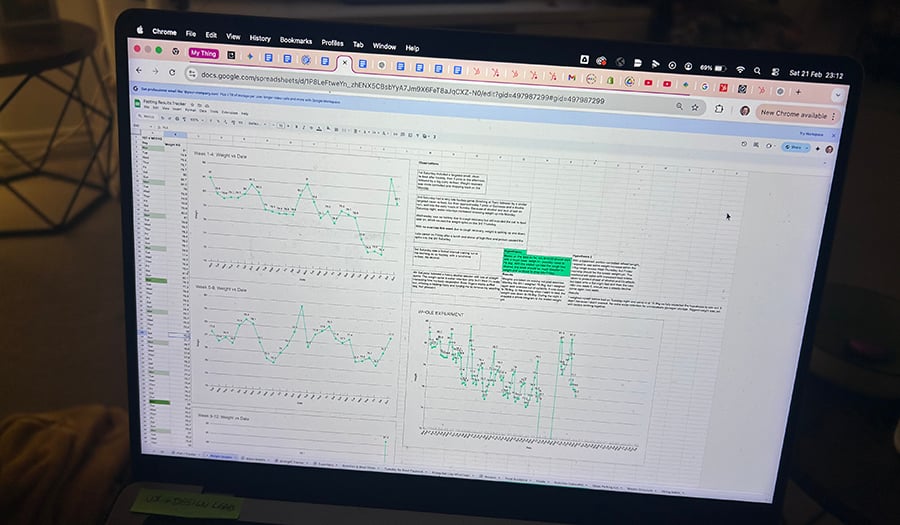
Meals repeated on purpose so variables stayed stable and I tracked all the data. Weigh-ins daily, evening waist measurements, food and water intake, alcohol, fitness sessions, issues - everything I needed to test with clarity.
Over the 3 months of Phase 1, my body fat reduced further. Energy became more predictable. Patterns in water retention and refeed response became clearer. Discipline tightened again.
But one thing stood out.
A strict fasting window alone does not guarantee ongoing body composition change or performance improvement.
Despite the hype you see on social media, extended fasting alone does not always mean that one day you wake up with the perfect physique.
What works for one person at one stage will not necessarily work for another. Physiology, training history, and stress load will be different. Even plant-based diets vary massively in composition and energy density.
Which is what led me onto testing new questions in Phase 2:
Does building strength help shed the stubborn fat that clings on?
Can muscle definition improve while maintaining tight fasting windows?
Can a plant-based diet support higher protein demands without loosening structure?
Does electrolyte timing influence performance output and next-morning weight?
At the time of writing, Phase 2 is about to enter the 3rd week of 8, and I'm excited for the week ahead.
Short answer: Intermittent fasting can stop producing visible changes once the body adapts to the routine. When that happens, training structure, protein timing, recovery and overall diet composition often matter more than simply shortening the eating window.
.png?width=185&height=185&name=Chris%20Dunkerley%20logo%202026%20(1).png)

Comments